News and Announcements
Press Release-Fishermen and Scientists Unite to Tackle Shark Depredation in the Pacific Islands (19 February 2026)
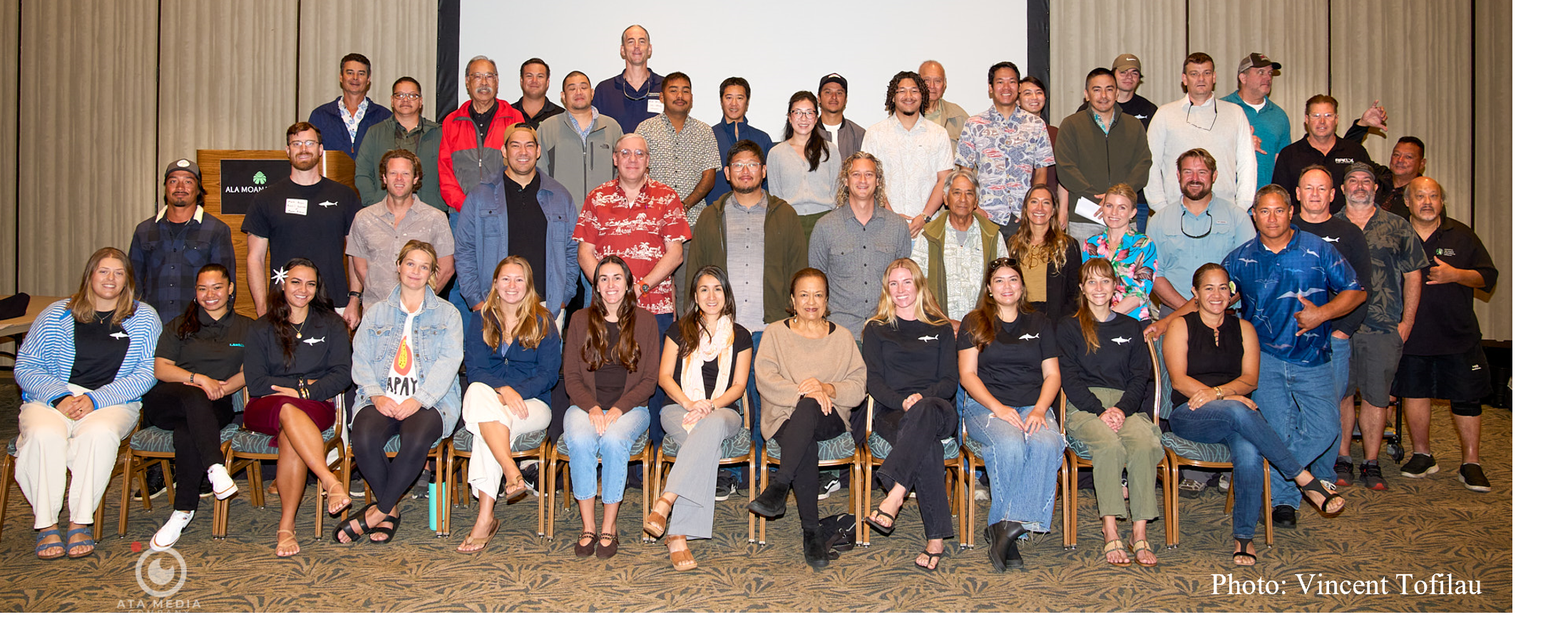 HONOLULU (19 February 2026) — The Western Pacific Regional Fishery Management Council, in partnership with the Pacific Islands Fisheries Group, hosted the region’s first shark depredation workshop Feb. 10–11, 2026, to address the issue and develop mitigation strategies for U.S. Pacific Island fisheries. Fifty-two participants from four countries and all three U.S. Pacific Island territories attended.
Shark depredation was repeatedly raised during the Council’s community consultation meetings held region-wide in 2025. Fishers described lost catch, damaged gear and safety concerns during bottomfishing and trolling—what many called a growing “tax” on their livelihoods. The issue was highlighted in Moloka‘i, Kaua‘i, Wai‘anae, Kona, Guam, the Northern Mariana Islands and the Manu‘a Islands, where fishers reported more frequent interactions both nearshore and offshore. Fishermen from American Samoa, Guam, the Northern Mariana Islands and Hawai‘i shared firsthand accounts and the need for practical solutions.
Plenary presentations reviewed trends in shark interactions across the Pacific Islands, the effectiveness and limitations of commercially available deterrent technologies, and the complex regulatory landscape governing shark interactions. Breakout sessions and an evening forum brought fishermen, scientists, managers and technology developers together to identify cost-effective fishing adaptations, priority research gaps and governance challenges linked to environmental change.
Participants described depredation as an increasingly significant economic and operational burden, including longer trips to replace fish. In some fisheries, fishers reported losing up to 50% of their catch in certain instances, along with growing “operational fatigue” from repeated shark encounters.
Fishers also discussed on-the-water strategies to reduce depredation—moving spots frequently to avoid shark aggregation, avoiding chumming or cleaning fish on the grounds, and using high-speed electric reels to bring fish to the surface quickly. Technology discussions included magnetic and electrical devices, as well as chemical repellents, with participants weighing cost, durability and species-specific performance.
“We need to catch the fish; if it works, it works regardless of scientific backing,” said Hawai‘i fisherman Eddie Ebisui III, who volunteered to test deterrent options in real-world conditions.
American Samoa participant Vincent Tofilau said the workshop “provided a ground-breaking platform for scientists and fishermen” and laid the foundation for future regional collaboration.
Recommendations emphasized fishermen must be active partners in solutions and that improved data are needed to better understand the scale of depredation and its impacts on commercial, noncommercial and subsistence fisheries.
Key recommendations included:
- Improve regionwide reporting and data collection on depredation events, including fish lost to sharks, number of hooked sharks and socio-economic costs, using simple and non-burdensome tools and building on existing surveys and programs.
- Coordinate near-term, cooperative field testing of deterrent technologies with fishermen and share results across islands; evaluate cost, durability and species-specific performance and consider combinations of deterrents and adaptive fishing practices.
- Expand localized research to better understand shark abundance and behavior by island areas and U.S. exclusive economic zones, and ensure assessments and management decisions reflect local conditions. This could expand capabilities for managing sharks in fisheries.
- Improve clarity and consistency among federal, state and territorial regulations to allow harvest of shark species with healthy populations, and explore funding mechanisms (e.g., grants or subsidies) that can help fishermen adopt mitigation measures where regulations limit responses to depredation.
The Council will hear a report on workshop outcomes at its 206th meeting on March 24-26, 2026. Participants urged the agencies, universities and community organizations to identify a lead entity to champion this issue and to convene a follow-up workshop within 6–12 months to review progress and share results from on-the-water deterrent trials. Participants also recommended expanding future discussions to include additional stakeholders, such as shark tourism operators, alongside fishers, scientists and managers.
Council Executive Director Kitty Simonds pointed out the lack of funding through industry cooperative research and development programs such as the Saltonstall-Kennedy (S-K) grant program. “S-K funding comes from 30% of customs receipts on imported fish products, which generates hundreds of millions of dollars each year, but only about $10 million is available to fishermen through grants. That’s a drop in the bucket of the support the program was intended to provide.”
The S-K Act requires at least 60% of funds be used for direct industry assistance grants benefiting the fishing community.
About the Council
The Western Pacific Regional Fishery Management Council is one of eight regional councils established under the Magnuson-Stevens Fishery Conservation and Management Act to manage fisheries in the U.S. Exclusive Economic Zone (EEZ). The Council is responsible for developing and implementing fishery management plans for waters surrounding Hawai‘i, American Samoa, Guam, the CNMI and U.S. Pacific Remote Island Areas. The Council works to promote sustainable fisheries, protect marine ecosystems and support the livelihoods of fishing communities through science-based decision-making and stakeholder engagement.
Upcoming Events